BLOG
One Piece Returns Today: The Elbaf Arc Begins — What to Read Before Watching
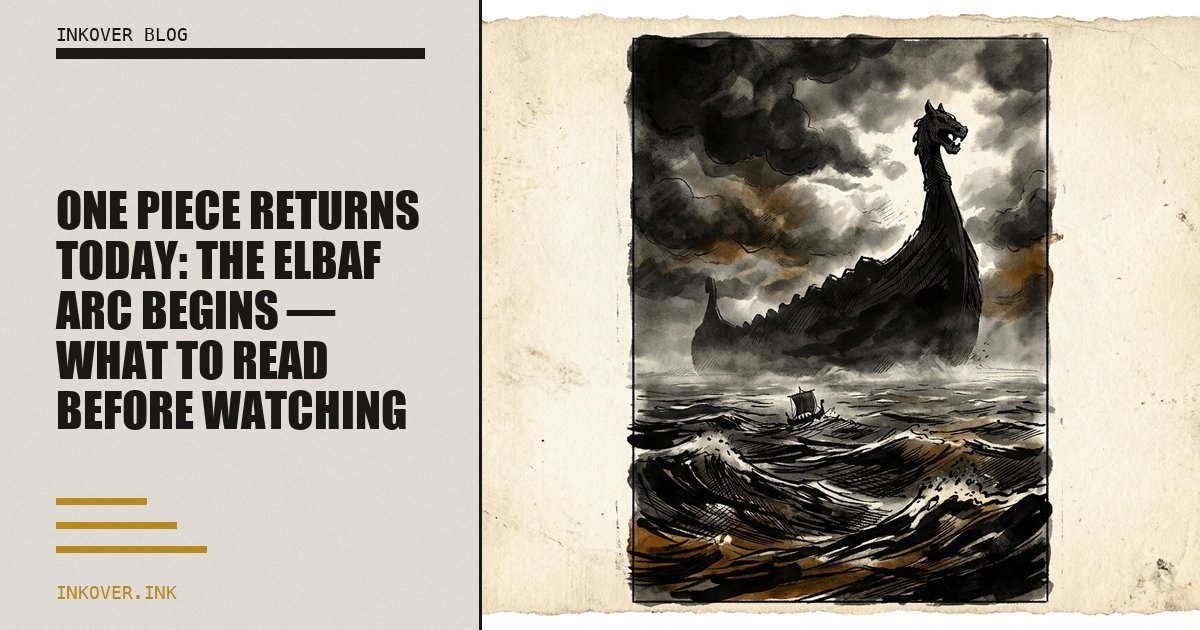
One Piece is back. After a three-month break, the anime returns today—April 5, 2026—and with it comes the arc that has defined the fandom's collective anticipation for nearly two decades: Elbaf, the Land of Giants.
This moment is enormous. Elbaf isn't a new concept buried in the series' mythology. It's a promise. When Eiichiro Oda first introduced the twin giants Dorry and Brogy in the Little Garden arc (chapters 115–129), he planted a seed so deliberately that fans have been waiting—sometimes impatiently—ever since. Elbaf represents something the series has built toward quietly: a deeper understanding of the world's history, the Void Century, and the role of ancient civilizations in shaping One Piece's endgame.
But here's the thing: the anime will adapt the manga chapters that have already been published. This is your chance to read ahead, to experience the arc the way Oda first told it, and to catch details that even professional translators sometimes miss in adaptation.
Why Read the Manga First
The most direct answer: the original manga is never just lines and colors. It's Oda's precise vision—every panel composition, every placement of a word balloon, every sound effect carries intention that doesn't always survive the journey to anime.
One Piece presents a specific translation challenge that goes beyond typical manga. The series invented its own languages (Fishman Karate terminology), layered Japanese wordplay into monster names, and embedded cultural references that require a translator to choose between literal accuracy and functional meaning. When you read the original Japanese manga—or a translation supervised by experienced One Piece editors—you're getting the author's full intent, not an adaptation of an adaptation.
The anime, for all its quality, is a different medium. Pacing changes. Scenes expand. Voice acting provides emotion that sometimes overshadows the page's deliberate silence. Reading the manga first means you've already absorbed Oda's rhythm, his panel-to-panel storytelling, and his exact word choices. When you then watch the anime, it becomes a layered experience.
What Chapters to Read Before the Elbaf Anime Debut
The Elbaf arc proper begins at chapter 1,086. However, there are three critical reading orders depending on how much time you have.
The Complete Foundation (Recommended): Start at chapter 1,056, the beginning of the Egghead Island arc. This 30-chapter stretch is essential—it introduces the Seraphim (cyborg duplicates), reveals Vegapunk's full role in the world government's plans, and sets up the precise political and scientific context that makes Elbaf's opening impossible to understand without. These chapters also contain world-building about giant DNA and ancient civilizations that pay off immediately in Elbaf.
The Direct Path (Moderate): Start at chapter 1,086 itself. Yes, you'll miss context, but the Elbaf arc is written to be mostly self-contained. The manga recaps key information in the opening chapters, and the giants' story is compelling enough to carry newcomers. This approach works if you've watched the anime consistently up through early 2026.
The Speedrun (Minimum): Read chapters 1,086–1,095 before the anime debuts. This gives you 10 chapters—roughly 90 minutes of reading—covering Elbaf's initial introduction and the arrival at the island. It's not ideal, but it's significantly better than walking in blind.
A Note on Availability: Official English translations of One Piece are published by Viz Media and updated monthly. For the most recent chapters (which may not be fully available in English yet at publication), fan communities like r/OnePiece and manga reading communities maintain synchronized translations of the raw Japanese chapters within hours of release in Japan.
The Translation Problem: Why Original Japanese Matters Here
One Piece's English translation is excellent—Viz's editors have spent decades building vocabulary and tone consistency. But One Piece is uniquely challenging because so much of its joy comes from untranslatable layers.
Consider the Elbaf arc's mythology. It draws heavily from Norse mythology (the arc's name, the giants' cultural aesthetics), but Oda synthesizes this through a Japanese lens. Norse concepts are filtered through Japanese fantasy conventions, and then translated again into English. Each step compresses something.
The creature designs, the place names, even the way dialogue is punctuated—Oda's choices reflect where tension lives in Japanese sentence structure, not English's. A translator has to decide: do I preserve the shape of the Japanese (and sound foreign), or do I adapt it to feel natural in English (and lose Oda's original pacing)?
Sound effects are another major casualty. Oda writes sound effects (onomatopoeia) directly into the panels. "Donn" for a giant footstep, "Hyuu" for wind through ancient corridors. English translations replace these with something like "Thud" or "Whoosh"—comprehensible, but they lack the specific texture Oda chose. Reading the original Japanese, or a translation that preserves the romanized Japanese SFX, keeps you tethered to Oda's sensory design.
For a series as meticulous as One Piece—where Oda has planned out details decades in advance—reading the original (or a translation that respects it) ensures you catch the Easter eggs and callbacks that might otherwise whisper past you.
Understanding Elbaf's Place in the Story
Elbaf is not filler. It's a story beat Oda has signposted since the earliest arcs of the series. The giants—Dorry and Brogy, then later Hajrudin and other members of the giant warrior crew—have always been positioned as keepers of history.
The Void Century remains One Piece's central mystery: 100 years of history erased by the World Government. Giants, as long-lived beings, would have witnessed portions of this era. Elbaf, their homeland, is probably a repository of that history. Narrative logic suggests that Elbaf will provide crucial lore about:
- The origin of the ancient kingdoms and the technology of the Ancients
- Why the World Government fears giants so much that it erased them from official history
- The connection between giant culture and D. (the initial letter many of the series' central characters share)
- Details about the true history of the world and the Poneglyphs
This isn't speculation—it's reading Oda's structural setup. Arcs don't exist in isolation in One Piece. They're chapters in a long story moving toward an ending that Oda has clearly planned. Elbaf's position at this stage of the series (post-Wano, post-Egghead) indicates it's a major lore arc, not a breather arc.
The Challenge of Translating One Piece (And Why AI Tools Still Fall Short)
Here's where we get honest: no translation, human or AI, will perfectly capture One Piece's original voice. But they vary wildly in how close they get.
AI manga translation tools have improved dramatically. Systems using models like Gemini can now handle panel layout, preserve speech bubbles, and even attempt OCR on sound effects. What they often miss is context collapse—the way One Piece's puns, cultural references, and character voice quirks are interdependent.
Take a simple example: a giant character speaks in ancient, archaic Japanese. An AI system translating word-for-word might render this as formal English. But Oda's intent is to signal that this giant is old, connected to history, speaking from a different era. The actual English translation choices involve matching dialect register, using archaic phrasing, choosing vocabulary that sounds "aged." These aren't mechanical word swaps—they're narrative interpretation.
Or consider character nicknames. One Piece characters often have multiple names, and the meaning in Japanese doesn't always carry to English. A human translator knows which version to use in which context. An AI system struggles because it doesn't hold the full character voice in memory across chapters.
This is why even with AI tools making manga more accessible, reading the official translation (or the original Japanese if you're fluent) for a series like One Piece is still irreplaceable. The series is too dense with authorial intent.
If you're interested in exploring how manga translation actually works—the human decisions, the cultural negotiation, the impossible choices translators make daily—we've written extensively on this topic. Inkover focuses on making manga translation more accessible, and One Piece is a perfect case study for why the work of translation matters.
How to Prepare Yourself for the Elbaf Anime
-
Read at least chapters 1,086–1,100 before the anime starts airing. This will take you through Elbaf's introduction and into the arc's opening major sequence.
-
Have the official English translation on hand (Viz Media volumes or the online platform Shonen Jump+). This is the translation most anime fans use as reference, and it's consistent with the voice acting choices in the dub.
-
Keep a wiki or reference guide nearby. Elbaf introduces dozens of new giant characters, and a quick reference to giant names and titles will help keep you oriented. Reddit's r/OnePiece has active chapter discussion threads the day after Japanese release.
-
Pay attention to ancient architecture and technology. Oda spends real panel real estate on environmental storytelling in Elbaf. These backgrounds contain clues about the Void Century. Noticing them in the manga version gives you a treasure hunt aspect that the anime might diffuse through pacing.
-
Reread the Little Garden arc (chapters 115–129) before starting Elbaf. It's only 15 chapters and features Dorry and Brogy, the giants who started this whole mythology. Rereading it reminds you of Oda's original vision for giant characters and creates a full-circle moment that's deeply satisfying.
Why This Matters Beyond Entertainment
One Piece is the best-selling manga of all time—over 500 million copies sold across its 27-year run. That's not luck. Oda has maintained reader investment across decades by rewarding careful attention. The fans who reread arcs, who annotate panels, who correlate details across hundreds of chapters—those are the fans having the deepest experience.
Reading the Elbaf arc in manga form before the anime isn't about being an "elite" fan. It's about claiming the fullest experience a story can offer. It's about sitting with the author's exact choices for a few hours, letting the pacing and composition work on you directly, before the intermediate layer of adaptation changes the timing.
The anime will be excellent. It will also be different. Having read the manga first means you'll catch what's changed, what's been emphasized, what's been compressed. You'll understand not just the story, but the storytelling. That's the advantage.
Related reading: